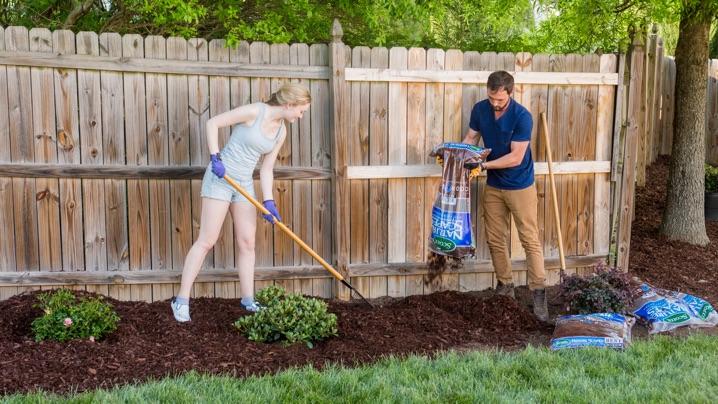
 What should you do with older mulch that was left in addition to annual flower beds or vegetable beds throughout the winter? Be aware this is a different problem from what to do in garden beds which contain live plants (albeit maybe dormant) through winter, in which the attention of this question is primarily about the crops.
The current FAQ, by contrast, relates to empty beds (living plant material has died or has been chosen ), and also the question concentrates on the compost: specifically, if the old mulch remains workable –and, in that case, what you ought to do using it. In regards to this biodegradable material (bark, leaves, straw, etc.), to not mulches which don’t break down easily (rock, plastic, etc.).
Is Old Mulch Still Excellent to Use?
Vegetable garden beds and yearly flower beds won’t have plants in them throughout summer but are mulched in the fall to safeguard their dirt from the harsh elements from the winter. You’ve worked hard to develop the fertility of your garden dirt, which means you wouldn’t want gusty winds or torrents of water taking any off it, do you?
In the event the status of the old mulch hasn’t decomposed considerably from the time spring comes, it will continue to be usable. How can you determine its situation? Well, scoop up some of these mulch in your palms. Has it more or less broken down into fine particles, which means it is not clearly distinguishable from grime? If that’s the circumstance, it will no longer work very efficiently as a mulch; it’s time to replace it. If, nevertheless, it has largely kept the appearance and texture that it initially had, then it’s possible to re-use it. The 1 exception is if your plants in this garden mattress had undergone disease issues last year which you believe could be tracked back into the mulch; in which case you’d like to remove and eliminate stated mulch correctly (consult with the officers from your city to ascertain a suitable method to eliminate such substance ).
If upon review, you decide the old mulch hasn’t, in actuality, decomposed considerably, you need to repaint the old mulch aside for today so you are able to prepare the planting bed. If you have to get it out of the manner, attaching the compost into a wheelbarrow, dumping consecutive loads on a tarp off to the other side. Employ mulch on the vegetable garden bed or yearly flower bed, and until it work it into the soil with a scoop.
You can now see why the very first schooling was to rake the older mulch apart: in the plan of rototilling or spading the mulch to the backyard, the old mulch could have been tilled or spaded beneath, forcing one to get and employ new mulch. That could be a waste of energy, time, and cash.
Now set the old mulch straight back on the planting bed.
This entire procedure can be finished well beforehand of planting time. When it’s time to plant, then gently remove the mulch out of only the region where you have been sowing seeds or transplanting plants. Together with the mulch in place in this fashion, weeds never have much of a opportunity to emerge.
However, what if the old mulch has, in actuality, decomposed considerably over the duration of winter? If that’s the circumstance, work it in the floor as organic matter so that it can function as a soil amendment, together with the compost. Subsequently acquire a load of fresh mulch for a substitute.
What About “Living” Mulches (Cover Crops)?
Though”cover plants ” (that can be so-called”living mulches”) is language more frequently discovered in agricultural circles than in landscaping circles, some homeowners might find cover plants quite beneficial.1
Cover plants are sowed more than vegetable gardens and yearly flower beds at the autumn to protect them from the winter. When spring returns and you’re preparing to plant , you have to receive a cover crop from the way. However, you can kill 2 birds with one stone: tilling cover plants to both free up the garden for spring planting and places nutrients to the ground.
Mow cover plants initially, then conduct a garden tiller within the –a procedure called”tilling under” the protect plants. By mowing , the garden tilling will proceed simpler, as you’ll be tilling shorter plant. After mowingspread compost over precisely the exact same garden bed, and until that beneath, also, as you would with some other beds which did not possess cover plants.

Leave a Reply