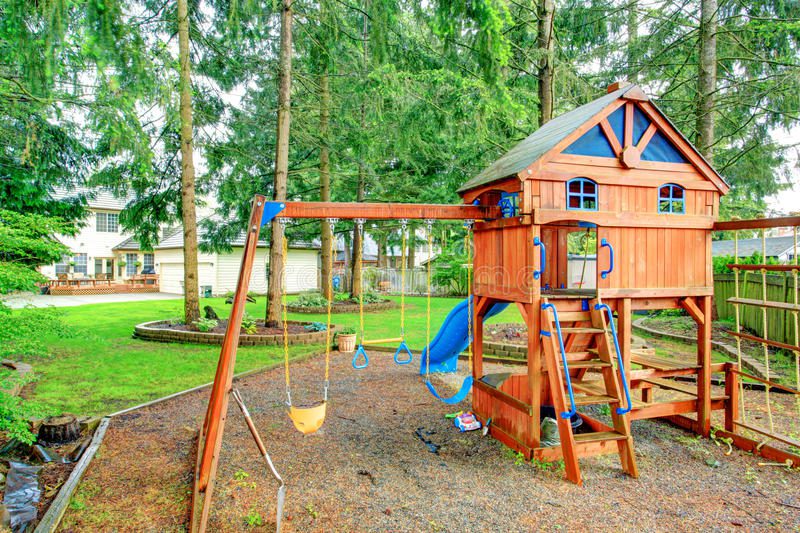
Children can benefit greatly from playground equipment, which allows them to develop motor and social skills. Children become healthy teenagers through their interactions with other children and the physicality of engaging in it. They see laughter and entertainment. I see creativity, reasoning and dexterity.
The first thing you should do is decide if this is something you can handle or if it is something you need to hire someone to do. Take into account the dimensions of the components. This will be a two-person job. The members are heavy and must be placed in concrete. Be aware of your strengths and limitations before asking for help. For more remote areas, you may need to hire contractors.
Which age group(s), are you catering to? What amenities would they like to see in the play gym? It might be a good idea to ask them to create a “wish list” of the components they want to see. Then, have them rate each item from 1-10 (only one per submission). This will allow you to break down ties during the decision-making process. To ensure ongoing stimulation, you must ensure that the equipment chosen provides adequate physical challenges for all age groups. The design should provide sensory stimulation as well as physical stimulation for slightly older participants.
It is important to consider the size of the Playground you will be sacrificing. After deciding on the size of the Playground, it is important to examine the area to see if there are any overhead or lateral obstructions. Will you need to level the ground or do you need to regrade your yard? If you decide to purchase a pre-designed set, most modern manufacturers will provide guidance as to the clearances required on each side.
Is the location compatible with the way you plan to use the yard? Is the playground visible from the street? Is there any dangers or jagged rocks nearby? Are there overhead power lines or other obstructions nearby? For information on local building regulations and ordinances regarding placement, including proximity to power lines and fences, please contact your local Building Department.
Kits and raw materials, if you choose to go this route, will be the largest expenses for this project. However, they are not the only considerations in budgeting. You should factor in shipping/handling and taxes before you proceed. These figures can be several hundred dollars if not purchased/transported locally. If third-party labor is used, it’s important to factor in the installation costs. If third-party labor is being used, the site must be prepared. Grading contractors need large equipment and trucks to transport fill material and property grade a site. Other site furnishings, such as benches and water fixtures, should also be considered.
You must purchase wooden kits made from pressure-treated wood or with cedar and redwood posts. Redwood and cedar are naturally more resistant to wood-consuming insects than other options, and are also more weather resistant. However, they are more expensive than the others. To protect metal kits from constant UV and moisture exposure, they will be powder-coated or vinyl-coated. There are also bare metal kits, but these should not be used if there is too much sunlight. These kits can be extremely hot in summer and could pose a risk of burns. You can design around this by using sun shades or other types of awnings.
After narrowing down your list to a few kits, you can research the history of each kit by looking for independent reviews. You shouldn’t be surprised to find very few or no reviews for a particular item.
You may see kits that have been rebranded by other manufacturers. The original name/sku might have changed. Reverse image search of the main kit picture is a good idea as most manufacturers don’t update it when reselling. This will make sure that your reviews are posted on all sites, regardless of whether the company has rebranded.
The requirements for installation does not disappear. To ensure proper attachment, fasteners must be checked at least once a year. A hammer test can be used to check the bolts for tightness. If they make a sound when you tap them with a hammer it means that the bolts are tight. If it makes a hollow sound it means that it needs to be tightened. You should immediately take action on any signs of oxidation within the fasteners. Lubrication should also be applied to pivoting connections and bearings. In areas such as Florida where wasps are common, you should bring some wasp spray to help you fight any hives that may have formed. You should look out for cracks in the plastic parts, splinters on the wooden posts/members and rotten/damaged board.
Original Blog: https://realtytimes.com/archives/item/1045355-how-to-choose-the-best-playground-equipment?rtmpage=

Leave a Reply