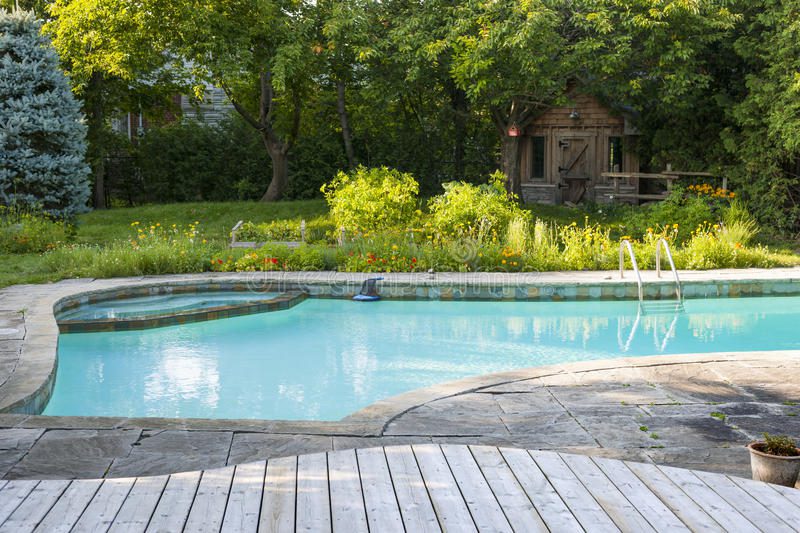
 Swimming pools can be a great source of fun, exercise and relaxation. But does it increase the value of your house?
Recent research shows that an in-ground swimming pool can increase the value of your house by 7 percent. The cost of installation and maintenance may be greater than the value gain.
It’s more complicated than any other home improvement project. Let’s examine the pros and cons of installing a swimming pool.
The Key Takeaways
- A pool in the ground can increase the value of your house or make it easier to sell.
- The initial cost of installing a pool, as well as the ongoing costs for maintenance and insurance could be more than offset by any increases in value.
- There are several ways to finance your pool, such as using your credit card, home equity or personal loan.
When does a swimming pool increase your property value?
Let’s first define some terms. We mean in-ground pools, the kind of pool that is permanent and requires you to dig a hole in your backyard. Not the type above ground that looks like a tank. “In many markets in-ground swimming pools are the preferred choice, and above-ground ones do not add value to a house,” Melissa Zavala says, who is a realtor with Broadpoint Properties, San Diego.
Experts say that a pool in good condition can increase your home’s resale price. If you look at real estate listings, it is likely that you’ll see homes with pools in the backyard.
Here are some instances where a pool might increase your home’s value or make it more marketable when you sell.
- Your neighborhood is likely to have pools.
- The climate allows the pool to be used all year round, regardless of the season.
- The pool blends in with the yard but leaves room for space
- The target homebuyers tend to be affluent and either without children or older children (not the starter-home type).
In regions that can use them all year round, pools are highly sought after. Tom Casey is the vice president of Anthony & Sylvan Pools, Doylestown. He says that if you are in a warm climate, like Florida or Texas it will increase your property’s value, and it may make your house more attractive to buyers. Owners of swimming pools in coastal or resort communities that rent vacation homes can command higher rates for their properties than those without. Higher-end communities are more receptive to pool installations that can increase the resale price of a house.
If you live in a neighborhood where most houses have pools, but not all, your house’s value could be affected if it is put on the market. Robert Taylor of The Real Estate Solutions Guy in Sacramento, Calif., says that a pool will not affect the value of a home if most of your neighbors have them.
How much value does a pool add to a home?
Adding an in-ground pool can increase your home’s value as much 7 percent — that’s the number that’s often cited by residential real estate authorities like HouseLogic, Today’s Homeowner and HomeAdvisor. But the actual amount of value it brings can vary by market.
For instance, in a warm-weather market like Los Angeles, homes with pools sell for about $95,000 more than comparable ones without, per a recent report by real estate brokerage Berkshire Hathaway HomeServices California Properties. Given that the median LA home price is around $909,000, that’s a 10 percent increase. But in other parts of the state, the report notes, the pool offers less of a bump — anywhere from $20,000 to $45,000 more — which worlds out to a more modest 3 to 7 percent increase, even with the lower home prices in those areas.
Location, location, and location make a huge difference in real estate. DiBugnara says that in towns where there are fewer pools than average, the value of a home with a swimming pool can increase significantly. “Also neighborhoods with a high concentration of school-age kids will see a greater need for pools.”
But be warned: the mere presence of a swimming pool won’t increase your chances of getting a higher resale price. The condition of the pool is also important. DiBugnara warns that a poorly maintained pool, in need of repairs or maintenance, could lower the value of your home and discourage buyers.
Other considerations for adding a swimming pool to your home
It is important to understand the value that a swimming pool can bring, as adding and maintaining one is not cheap. The cost of pool repair, maintenance and insurance can be high, which could put off some potential buyers. They’re important to think about if you ever plan to sell your house.
Pool installation costs
HomeAdvisor estimates that the cost of building an in-ground swimming pool, including labor and materials ranges between $45,000 and $85,000 for a pool made of fiberglass and $55,000 and $100,000 for a pool made from concrete or gunite.
Maintenance of swimming pools
Repairing and maintaining your pool is not cheap. HomeAdvisor says that basic pool maintenance costs between $500 and $4,000. Add in utilities like water or fuel if you have a heater and your total annual cost can reach up to $10,000.
The pool will need to be vacuumed regularly and cleaned during the swimming season. You may also want to purchase accessories such as telescoping poles, attachable brushes, and leaf skimmers.
You may also want to think about larger repair and upgrade projects if you plan on staying in your house for a long time. HomeAdvisor says that concrete pools will eventually need to have their surfaces resurfaced, and this can cost anywhere between $2,250 to $15,000
This is one of the reasons that pools have historically been a less attractive option. Casey suggests that homeowners can reduce their costs significantly by performing some maintenance themselves rather than hiring a pool company.
Recent tech innovations also helped. Casey says that investing in a pool with saltwater rather than chlorine can reduce costs.
Increased Homeowners Insurance
Your homeowners insurance rates will be higher if you have a swimming pool. Your homeowners insurance will increase. If you decide to sell your house in the future, it is likely that your buyer will pay higher rates.
Lev Barinskiy is the co-founder and CEO at SmartFinancial Insurance, based in Costa Mesa, Calif. Most policies cover 10 percent or less of external structures and fixtures, such as a swimming pool. They also cover a majority of accidents that occur around a swimming pool.
Barinskiy says that even though your homeowners’ insurance will cover pool accidents in the event of injury or death, you could still be held legally responsible if you did not provide a safe environment for guests when you let them use your pool.
If your insurer considers your pool to be an external structure, then you should list it on your insurance policy. Barinskiy also notes that local laws and most policies require you to install a fence around your pool, as well as remove any diving boards.
You may want to consider a personal umbrella insurance policy, which will provide liability coverage beyond your homeowners’ policy.
How to finance a swimming pool
Want to build a swimming pool? You may have to borrow money in order to make that purchase. There are several pool finance options.
Cash-out refinance
Cash-Out Refinance involves taking out extra cash at closing to put towards the pool. Cash-out refinances are a good option if the interest rates are lower. However, it is not always the best decision in high-rate environments.
Home equity loan
You can borrow money against the equity in your home when you apply for a loan. This lump-sum loan is similar to a second mortgage. You’ll generally need to have 15-20% equity in your house to qualify.
Home equity Line of Credit (HELOC).
A Home Equity Line of Credit offers you a lump sum that can be accessed when required, up to an approved limit. The variable rate of interest is only charged on the amount you borrow. Your home acts as collateral, similar to a home-equity loan.
Personal Loan
Personal loans are unsecured loans that don’t require collateral and do not tap into the equity in your home. However, they may have a higher rate of interest than a HELOC or home equity loan.
Credit Card
If you do not qualify for the other options, credit cards are a good alternative. But only if you can obtain or have a large enough credit limit. You would like to be approved for an introductory card with a low or zero rate that you could pay off before it expires. It could be a card that rewards you if you make a large purchase in the first couple of months.
The final word on how pools can add value to your home
Before you commit to a pool, make sure you know what it is that your swimming pool will do for you. It can be a great investment but it is not a sure thing. It can be expensive to maintain, repair and insure a pool. It’s not guaranteed that the pool will increase the value of your home or that you spent to install it.
When it comes time to sell your pool, you should also consider how to prepare and market it. Casey recommends that you repair and clean the pool, and stage your outdoor retreat. You also need to market your home well and cater to the correct buyer. He says that the most likely buyers are those who are looking for a higher-end home, and families with children or teenagers.
If you have it, show it off. Casey advises that if you live in a cooler climate you should sell your home when the weather is good and you can use your pool. Open your pool early if you are planning to sell in spring. A newly opened pool will have a great curb-appeal.
Original Blog: https://www.bankrate.com/homeownership/pool-add-value-to-home/

Leave a Reply